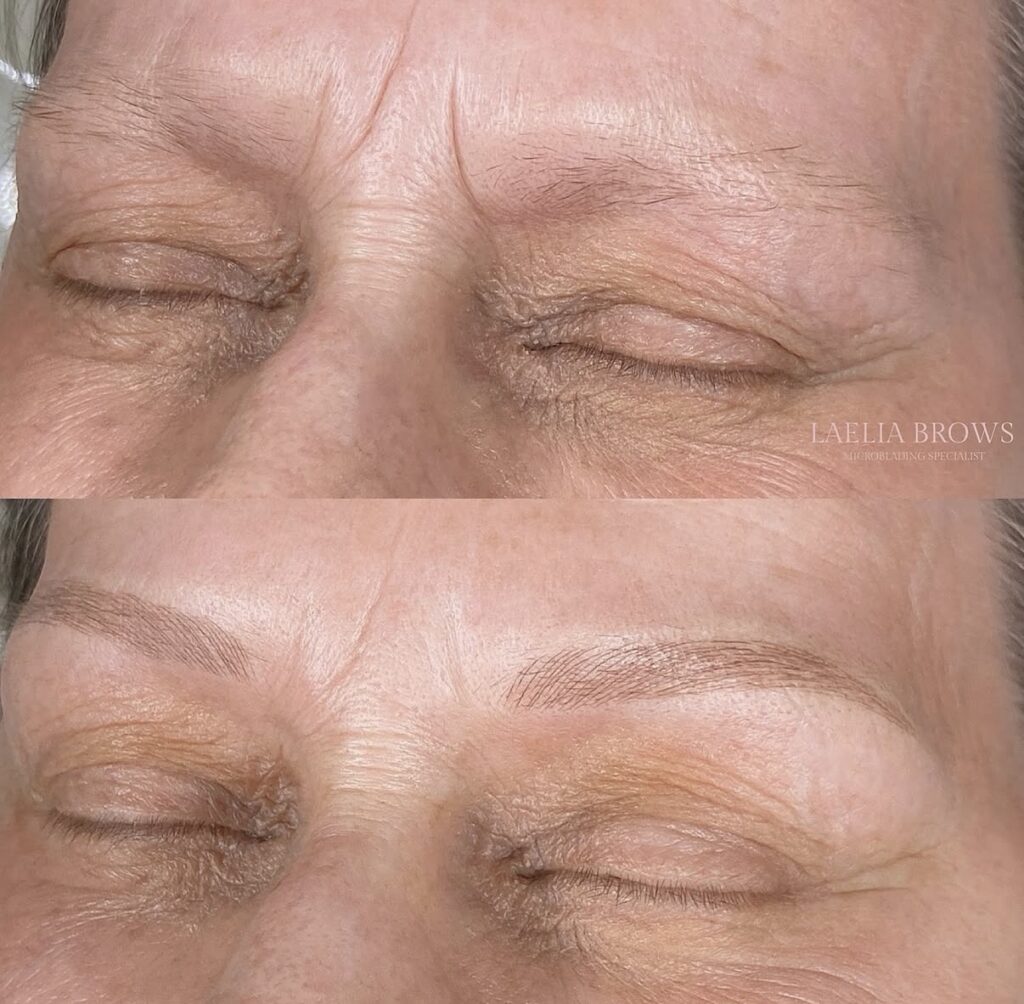
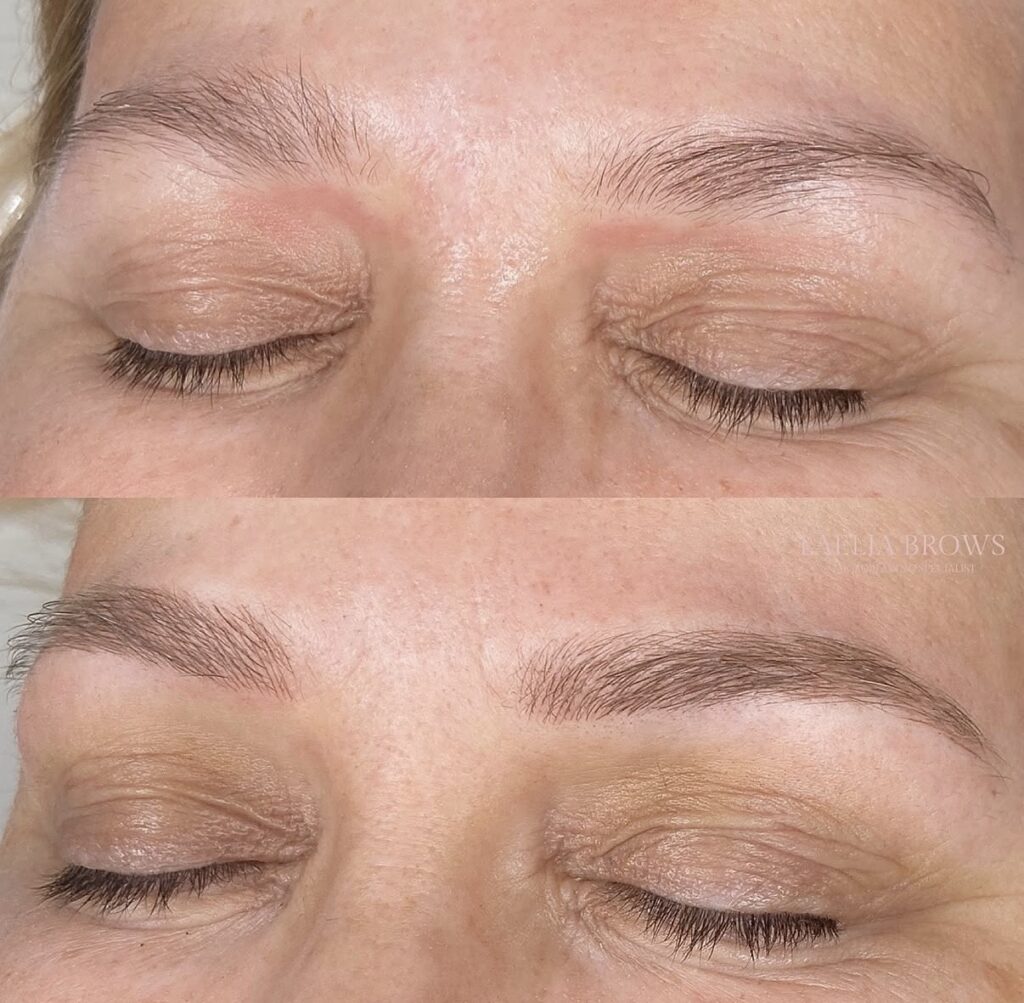
If you’re over forty and considering microblading, you may be wondering whether your skin is still suitable for it.
It absolutely can be. Age itself isn’t what determines the result. What matters is the condition of your skin, because mature skin behaves differently and requires a more considered approach.
Collagen is the protein that gives skin its structure and its ability to spring back. It declines gradually over time, and by our forties and fifties the change becomes visible. The skin becomes thinner, less elastic and often drier, and years of sun exposure and hormonal change add to this. The brows themselves change as well. Hairs thin, lose their depth of colour or turn grey, and the tail of the brow can soften and lose definition.
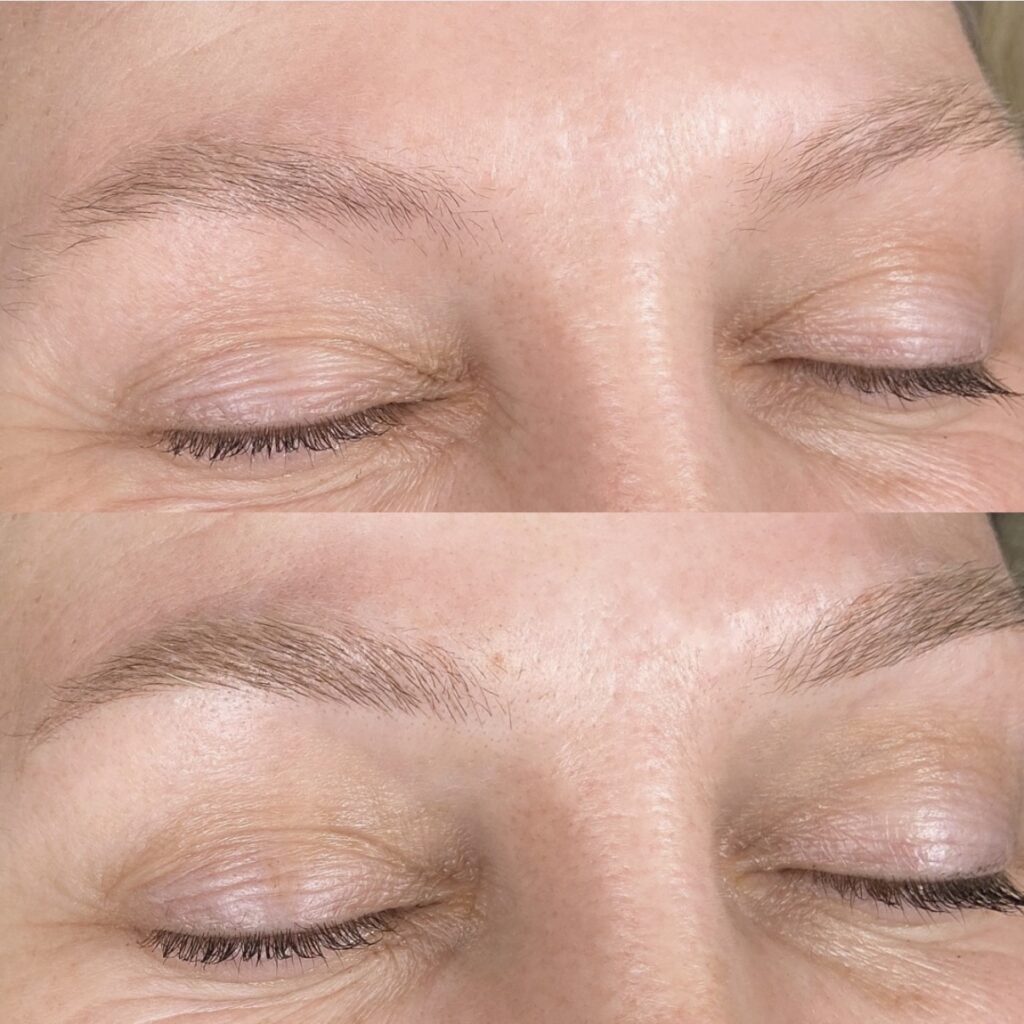
These changes affect microblading in three ways. Thinner skin is more delicate, so it needs a lighter touch and greater precision to keep pigment at the correct depth. Skin with less elasticity holds a stretched surface less firmly, which affects how crisp a stroke can be. And healing can take longer and be less predictable, with pigment sometimes settling differently from one area to the next.
This is why I never approach mature brows the way I approach younger skin. Before I make a single stroke, I assess the thickness, texture and hydration of your skin, and I map the brow to your own structure: the brow spine, the direction your hair naturally grows and the position of your brow bone. I use a three-point stretch, holding the skin firmly but gently in three directions, so the surface is smooth enough for a clean stroke without pulling the tissue. My pressure is lighter, and my tools are chosen for the skin I am working with. The aim is soft, precise strokes at the right depth, not extra pigment added to compensate for softness.
Design matters as much as technique. Brows sit differently as we age. The lid softens, the brow can lower and the tail loses definition. Lifting or darkening the brow to fight this rarely looks natural. I work with your natural shape and refine it gently. Colour is chosen for your hair and your undertone, and as brows turn grey I usually favour a softer depth over strong contrast, because a colour that looks natural on the day should still look natural once healed.
The first appointment is deliberately conservative, and density is built at your perfecting appointment six to eight weeks later. On mature skin this matters even more. It allows us to see how your skin actually heals and holds pigment before anything is added, and it protects delicate skin from being overworked in a single session, which is what leads to blurred strokes and uneven healing.
Mature skin is not a barrier to microblading. It is a reason to be more careful.
The brows that suit you now are not the brows you had at twenty, and they should not try to be.