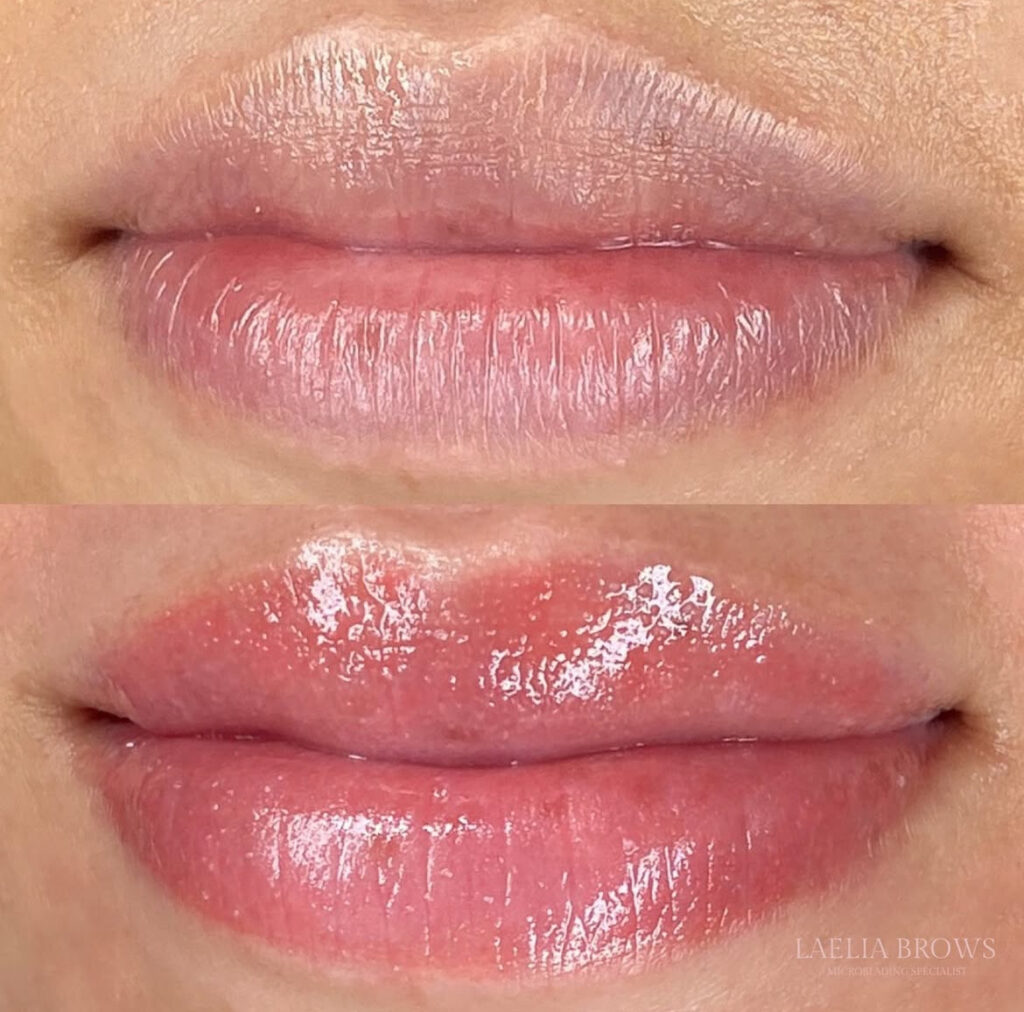
One of the most common assumptions about lip blush is that there’s a single shade that will give everyone that soft, “your lips but better” result.
There isn’t, because your lips aren’t a blank surface. Colour is chosen around what’s already there, not simply placed over the top of it.
Your lips have their own natural colour, influenced by the melanin in your skin and the blood vessels visible beneath its thin surface. Your natural pigmentation, along with any warm, cool or neutral tones present, influences how a lip blush pigment will appear once healed. Two people can have similar-looking lips in a photo but respond quite differently to the same pigment. This is why choosing the right colour involves looking closely at your natural lip colour rather than relying on a shade chart alone.

Understanding Your Natural Lip Colour
This is where colour selection becomes less about matching a shade and more about balancing what is already there.
Pigment doesn’t behave like lipstick sitting on the surface. Once placed within the skin, it interacts with your natural lip colour, influencing how the final shade appears. A colour that looks like a soft pink in the pigment pot may heal quite differently depending on the pigmentation already present in your lips.
Depending on your natural colouring, we may choose a warmer, cooler or more neutral pigment to help achieve your desired result. For example, lips with a naturally cool or purple cast may require a different approach to achieve a soft, balanced pink, while lips that are naturally warm or red may need a carefully selected shade to avoid adding too much warmth.
The aim isn’t simply to choose the prettiest colour in the pot. It’s to understand how that pigment is likely to interact with your natural lip colour and select a shade that works with it.
How Your Skin Tone Influences Colour Selection
Your skin tone and natural lip pigmentation also influence how a colour will appear.
On some lips, a delicate pink can look quite vivid, while on others, the same pigment may heal much more subtly. Deeper skin tones and more pigmented lips can also require careful consideration of colour choice and the way the pigment is introduced.
There isn’t one rule that applies to every skin tone. We assess each client’s natural colouring and individual lips before deciding which approach is most suitable. The goal is always to choose a colour that complements your natural features and creates a result that feels balanced rather than overpowering.
Your Personal Preferences Matter, Too
We also consider your overall colouring, including your skin, hair and eyes, alongside the result you’re hoping to achieve.
Some clients want something barely there, close to their natural lip colour. Others prefer a little more warmth, a soft pink or additional definition. There is no single right shade, because the best result depends on both your natural colouring and your personal preferences.
Our role is to help you understand what is achievable for your particular lips. If the colour you’re imagining may heal differently from what you expect, we’ll explain why and discuss an approach that is more likely to achieve your desired result.

Why Healed Colour Matters More Than Fresh Colour
One of the most important things to understand about lip blush is that the colour you see immediately after your appointment isn’t your final result.
Freshly treated lips typically appear more saturated and defined than they will once healed. As the skin recovers over the following weeks, the colour softens and settles, revealing a more natural-looking result.
This is why pigment selection is based on how we expect the colour to heal, rather than simply how it looks on the day. We consider the interaction between the pigment and your natural lip colour, as well as the way the result is likely to soften throughout the healing process.
Patience is an important part of the process, and the healed result is what ultimately guides our assessment of the colour.
What If Your Lips Have Uneven or Dark Pigmentation?
Some clients have naturally uneven lip colour, darker areas or significant pigmentation that can influence the final result.
In these cases, achieving an even, balanced colour may require a different approach. We may discuss whether lip neutralisation is appropriate before proceeding with a particular lip blush shade. Neutralisation focuses on addressing unwanted dark or cool tones to help create a more balanced base for the desired colour.
Not everyone needs this step, and the right approach depends on your individual lips. This is another reason why we assess your natural lip colour before deciding on a treatment plan.
Because every set of lips is different, we also can’t guarantee an exact shade based on a photograph or a reference image alone. Photos are helpful for understanding your preferences, but your natural pigmentation will always influence how a colour heals.
Choosing a Colour That Looks Like You
The right lip blush colour isn’t necessarily the one that looks best in the pigment pot or in someone else’s before-and-after photo.
It’s the one selected with your natural lip colour, skin tone and desired result in mind, with an understanding of how the pigment is likely to heal.
At Laelia Brows, colour selection is an individual process. We take the time to assess your natural colouring, discuss your preferences and choose an approach that works with your lips rather than against them.
The right colour isn’t necessarily the one that looks best in the pot. It’s the one that works best with your natural lip colour.